vue diff
Obtaining the longest increasing subsequence with the diff algorithm of vue
Vue renderder
as we know, vue use the diff algorithm to update the dom tree with vnode(which used when ends are Array), so we should use some efficient methods to Patch, the diff algorithm came into being.
Double ended diff in vue2
(tips: sorry, I don’t know if it’s called, but just call it that now), firstly, we will know the basic diff algorithm.
basic diff
const oldChildren = n1
const newChildren = n2
// we use `lastIndex` to record the most biggest `index` of the oldChildren
let lastIndex = 0
for (let i = 0; i < newChildren.length; i++) {
  const newVNode = newChildren[i]
  for (let j = 0; j < oldChildren.length; j++) {
    if (oldChildren[j].key === newVNode.key) {
      const oldVNode = oldChildren[j]
      // patch
      patch(oldVNode, newVNode, container)
      if (j < lastIndex) {
        // move
        const prevVNode = newChildren[i - 1]
        if (prevVNode) {
          const anchor = prevVNode.el.nextSibling
          insert(newVNode.el, container, anchor)
        }
      }
      else {
        lastIndex = j
      }
      break
    }
  }
}
some cases
-
newChildren.length greater than oldChildren.length
-
newChildren.length less than oldChildren.length
let find = false
for (let i = 0; i < newChildren.length; i++) {
  // ...
  for (let j = 0; j < oldChildren.length; j++) {
    if (oldChildren[j].key === newVNode.key) {
      // add this
      find = true
      // ...
      if (j < lastIndex) {
        // ...
      }
      else {
        // ...
      }
      break
    }
    // add following code maybe work well to delete el in children which not in the `newChildren`
    // else {
    //   unmount(oldChildren[j])
    // }
  }
}

// there means that the newVNode is not in the oldChildren, so we should add it
if (!find) {
  const prevVNode = newChildren[i - 1]
  let anchor = null
  if (prevVNode)
    anchor = prevVNode.el.nextSibling

  else
    anchor = container.firstChild

  insert(null, newVNode, container, anchor)
}

// there means that the oldVNode is not in the newChildren, so we should remove it
for (let i = 0; i < oldChildren.length; i++) {
  const oldVNode = oldChildren[i]
  const find = newChildren.find(el => el.key === oldVNode.key)
  if (!find)
    unmount(oldVNode.el)
}
in the basic , the time complexity is O(n^2), so we should use some efficient methods to improve it.
Double ended diff
this is the patch diff algorithm of vue
how it is working ?
we add four Pointer , which pointing separately the start and end endpoints of the oldChildren and newChildren, and we will compare the key of the oldChildren and newChildren to find the same and different elements, and then we will use the same elements to update the dom tree, and we will use the different elements to add or remove the dom tree. What is more, we will move the same elements to the right position by the key.
1. find same key
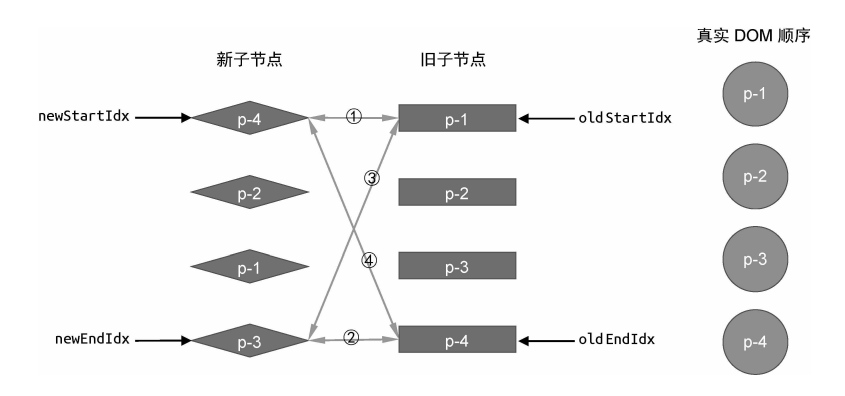
we make judgments in the order in the picture, and move in sequence after.
const oldStartIdx = oldChildren[0]
const oldEndIdx = oldChildren[oldChildren.length - 1]
const newStartIdx = newChildren[0]
const newEndIdx = newChildren[newChildren.length - 1]

const oldStartVNode = oldChildren[oldStartIdx]
const oldEndVNode = oldChildren[oldEndIdx]
const newStartVNode = newChildren[newStartIdx]
const newEndVNode = newChildren[newEndIdx]

// eslint-disable-next-line no-unmodified-loop-condition
while (oldStartIdx < oldEndIdx && newStartIdx < newEndIdx) {
  // eslint-disable-next-line no-empty
  if (oldStartVNode.key === newStartVNode.key) {

  }
  // eslint-disable-next-line no-empty
  else if (oldEndVNode.key === newEndVNode.key) {

  }
  // eslint-disable-next-line no-empty
  else if (oldStartVNode.key === newEndVNode.key) {

  }
  // eslint-disable-next-line no-empty
  else if (oldEndVNode.key === newStartVNode) {

  }
}
we will finished these cases that move the same elements to the right position by the key.
move it
while (oldStartIdx < oldEndIdx && newStartIdx < newEndIdx) {
  if (oldStartVNode.key === newStartVNode.key) {
    patch(oldStartVNode, newStartVNode, container)
    // next
    oldStartVNode = oldChildren[++oldStartIdx]
    newStartVNode = newChildren[++newStartIdx]
  }
  else if (oldEndVNode.key === newEndVNode.key) {
    patch(oldEndVNode, newEndVNode, container)
    // next
    oldEndVNode = oldChildren[--oldEndIdx]
    newEndVNode = newChildren[--newEndIdx]
  }

  else if (oldStartVNode.key === newEndVNode.key) {
    patch(oldStartVNode, newEndVNode, container)
    // move `oldStartVNode` to after `oldEndVNode`
    insert(oldStartVNode.el, container, oldEndVNode.el.nextSibling)
    oldStartVNode = oldChildren[++oldStartIdx]
    newEndVNode = newChildren[--newEndIdx]
  }

  else if (oldEndVNode.key === newStartVNode.key) {
    patch(oldEndVNode.el, container, newStartVNode.el)
    // move `oldEndVNode` to before the `oldStartVNode`
    insert(oldEndVNode.el, container, oldStartVNode.el)
    oldEndVNode = oldChildren[--oldEndIdx]
    newStartVNode = newChildren[++newStartIdx]
  }
}
in there, we finish basic cases, we will consider other special situations.
special situations
-
no same key when the loop
-
newChildren.length greater than oldChildren.length
-
newChildren.length less than oldChildren.length
// no same key when the loop
while (oldStartIdx <= oldEndIdx && newStartIdx <= newEndIdx) {
  if (!oldStartVNode) {
    oldStartVNode = oldChildren[++oldStartIdx]
  }
  else if (!oldEndVNode) {
    oldEndVNode = oldChildren[--oldEndIdx]
  }
  else if (oldStartVNode.key === newStartVNode.key) {
    // ...
  }
  else if (oldEndVNode.key === newEndVNode.key) {
    // ...
  }
  else if (oldStartVNode.key === newEndVNode.key) {
    // ...
  }
  else if (oldEndVNode.key === newStartVNode.key) {
    // ...
  }
  else {
    // find the same key in the newStartVNode of newChildren
    const idxInOld = oldChildren.findIndex(
      node => node.key === newStartVNode.key
    )
    if (idxInOld > 0) {
      const vnodeToMove = oldChildren[idxInOld]
      patch(vnodeToMove, newStartVNode, container)
      insert(vnodeToMove.el, container, oldStartVNode.el)

      oldChildren[idxInOld] = undefined
    }
    else {
      // add newStartVNode to before the oldStartVNode
      patch(null, newStartVNode, container, oldStartVNode.el)
    }
    newStartVNode = newChildren[++newStartIdx]
  }
}
// delete the oldChildren which is not used
if (oldEndIdx < oldStartIdx && newStartIdx <= newEndIdx) {
  for (let i = oldStartIdx; i <= oldEndIdx; i++)
    unmount(oldChildren[i])
}
so far, the double ended diff algorithm is finished. the time complexity is O(n^2) in the worst case
fast diff in vue3
double ended diff is not the best performance for vue, Introduced fast diff in the vue3.
how is it working ?
it is like the String comparison.
const oldNode = 'this is a good day'
const newNode = 'this is a bad day'
how we patch it that between oldNode and newNode ?
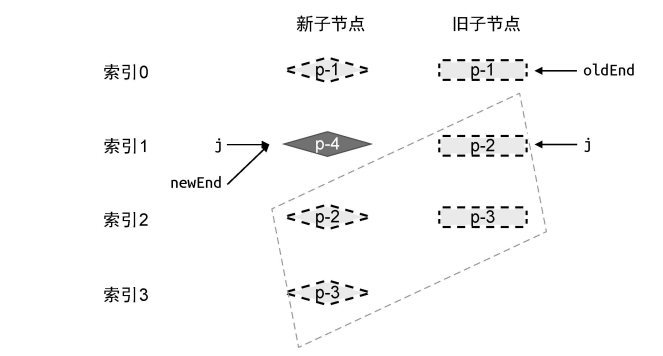
generally speaking, we just make oldNode = newNode to update it, but it is not the best performance. We will have comparision between start and end, we just find not equal element, As above, we just replace the ‘good’ to ‘bad’ to update it. the fast diff like this.
firstly, we will compare the start and end endpoints of oldNode and newNode until they are not equal.
const oldChildren = n1.children
const newChildren = n2.children
let j = 0
let oldVNode = oldChildren[j]
let newVNode = newChildren[j]
while (oldNode.key === newNode.key) {
  patch(oldVNode, newVNode, container)
  j++
  oldVNode = oldChildren[j]
  newVNode = newChildren[j]
}

let newEnd = newChildren.length - 1
let oldEnd = oldChildren.length - 1
oldVNode = oldChildren[oldEnd]
newVNode = newChildren[newEnd]
while (oldVNode.key === newVNode.key) {
  patch(oldVNode, newVNode, container)
  oldVNode = oldChildren[--oldEnd]
  newVNode = newChildren[--newEnd]
}
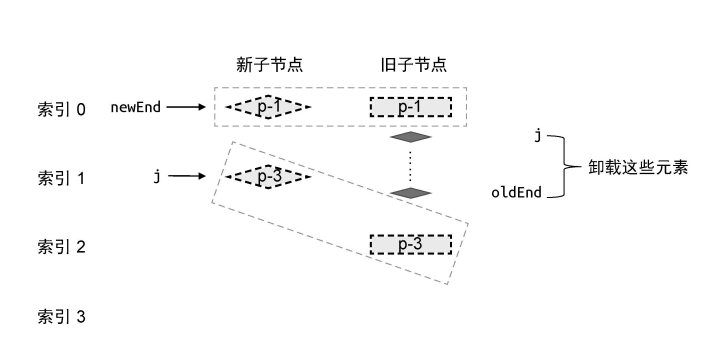
in here, we will find some cases that:
- newChildren.length greater than oldChildren.length

- newChildren.length less than oldChildren.length
// while(){
//   //...
// }

// while(){
//   //...
// }

if (j > oldEnd && j <= newEnd) {
  const anchorIndex = newEnd + 1
  const anchor = anchorIndex < newChildren.length
    ? newChildren[anchorIndex].el
    : null

  while (j < newEnd)
    patch(null, newChildren[j++], container, anchor)

}
else if (j > newEnd && j <= oldEnd) {
// j -> oldEnd 之间的节点应该被卸载
  while (j <= oldEnd)
    unmount(oldChildren[j++])

}
complex case:
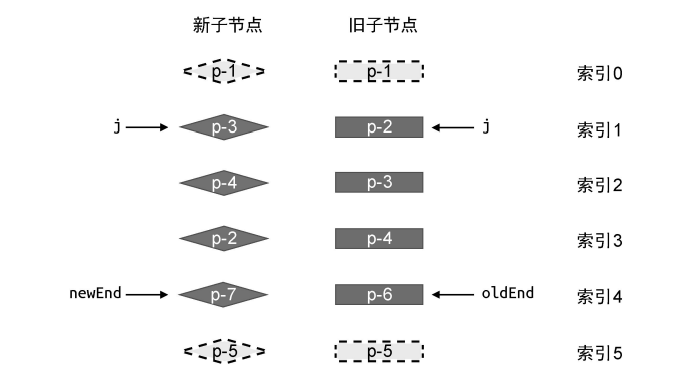
after above all, we will maintain the Array named source which contained index where newVNode.key appear in oldChildren,
based on above, the source is [2,3,1,-1],
the default value is -1 if the key had not appeared in the oldChildren.
how do we determine whether a node needs to be move it ?
it’s like basic diff, we need the count like lastIndex
See the following code:
if (j > oldEnd && j <= newEnd) {
  // ...
}
else if (j > newEnd && j <= oldEnd) {
  // ...
}
else {
  const count = newEnd - j + 1
  const source = Array(count).fill(-1)

  const newStart = j
  const oldStart = j

  // get key
  const keyIndex = {}
  for (let i = newStart; i < newEnd; i++)
    keyIndex[newChildren[i].key] = i

  let pos = 0
  let move = false
  let patched = 0
  for (let i = oldStart; i < oldEnd; i++) {
    oldVNode = oldChildren[i]
    if (patched < count) {
      const k = keyIndex[oldVNode.key]
      if (typeof k !== 'undefined') {
        newVNode = newChildren[k]
        patch(oldVNode, newVNode, container)
        source[k - newStart] = i
        patched++
        if (pos < k) {
        // move
          move = true
        }
        else {
          pos = k
        }
      }
      else {
      // cant find
        unmount(oldVNode)
      }
    }
    else {
    // in here,it is meaning that oldChildren.length greater than newChildren.length, so we should remove the redundant nodes
      unmount(oldVNode)
    }
  }

}
we define the variable patched that represents the updated nodes.
last but not least, how do we move the nodes ?
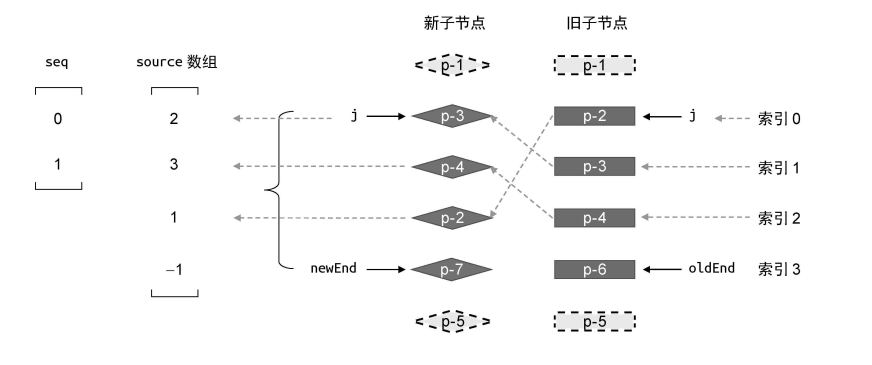
we will get the longest subsequence named sep in source, we just move nodes which are not in seq
seq: [0,1]
and define two variable s i,
s: it is a lastindex of seq i: it is a lastindex of oldChildren[start-end]
compare i with seq[s],if they are not equal, we will move it
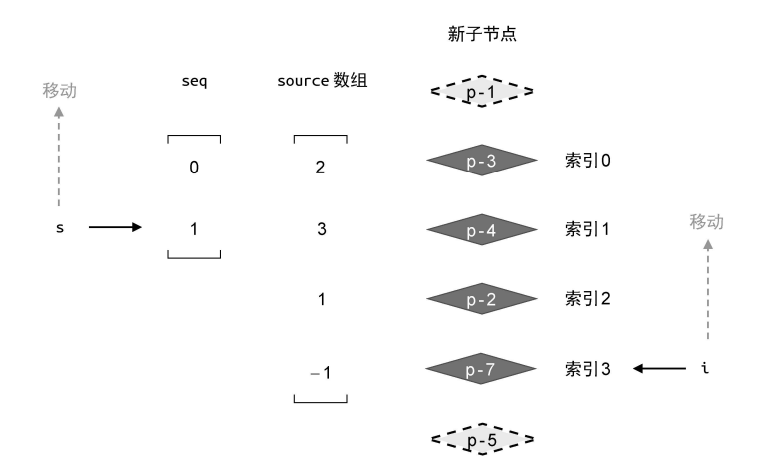
if (moved) {
  const seq = getSequence(source)
  let i = count - 1
  for (i; i >= 0; i--) {
    if (source[i] === -1) {
      // meaning the key of newChildren not in oldChildren, so we will add it
      const pos = i + newStart
      const newVNode = newChildren[pos]
      const nextpos = pos + 1
      const anchor = nextpos > newChildren.length ? newChildren[nextpos].el : null
      patch(null, newVNode, container, anchor)
    }
    else if (i !== source[i]) {
      // meaning moving
      const pos = i + newStart
      const newVNode = newChildren[pos]
      const nextpos = pos + 1
      const anchor = nextpos < newChildren.length ? newChildren[nextpos].el : null
      // move
      insert(newVNode.el, container, anchor)
    }
    else {
      // don't need move
      i--
    }
  }
}

function getSequence(arr) {
  const p = arr.slice()
  const result = [0]
  let i, j, u, v, c
  const len = arr.length
  for (i = 0; i < len; i++) {
    const arrI = arr[i]
    if (arrI !== 0) {
      j = result[result.length - 1]
      if (arr[j] < arrI) {
        p[i] = j
        result.push(i)
        continue
      }
      u = 0
      v = result.length - 1
      while (u < v) {
        c = ((u + v) / 2) | 0
        if (arr[result[c]] < arrI)
          u = c + 1

        else
          v = c

      }
      if (arrI < arr[result[u]]) {
        if (u > 0)
          p[i] = result[u - 1]

        result[u] = i
      }
    }
  }
  u = result.length
  v = result[u - 1]
  while (u-- > 0) {
    result[u] = v
    v = result[u - 1]
  }

  return result
}
so far, the analysis of vue diff algorithm has ended.
评论
加载中…
使用 GitHub 登录后即可留言。
使用 GitHub 登录评论功能尚未配置。
还没有评论,来做第一个吧。
在 GitHub 上查看讨论 →